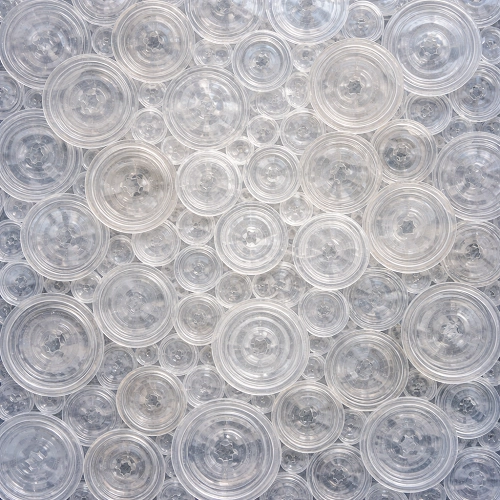
Plastic beverage cup lids are deceptively simple components that play a critical role in foodservice, retail beverages, and on-the-go consumption. From preventing spills and maintaining temperature to enabling safe sipping and supporting branding, cup lids sit at the intersection of material science, mechanical design, manufacturing efficiency, food safety, and sustainability. As consumer expectations and regulatory pressures evolve, the technical demands placed on plastic beverage cup lids have increased significantly.
Functional Requirements of Plastic Beverage Cup Lids
Plastic cup lids must satisfy a broad set of functional criteria:
Spill Prevention and Sealing
- Interference fit between lid and cup rim ensures retention under vibration and tilt.
- Bead-and-groove geometry must accommodate cup dimensional tolerances.
- Resistance to liquid leakage under internal pressure (e.g., carbonated beverages).
User Interaction
- One-handed opening or sipping.
- Comfortable lip contact.
- Clear tactile or visual indicators for drinking ports or straw holes.
Beverage Compatibility
- Hot liquids (coffee, tea) require heat resistance and venting.
- Cold and carbonated drinks demand pressure tolerance.
- Compatibility with acidic, sugary, or dairy-based beverages.
Logistics and Operations
- Stackability without jamming.
- Easy denesting in high-speed foodservice environments.
- Minimal deformation during transport and storage.
Materials Used in Plastic Beverage Cup Lids
Material selection is central to lid performance, cost, and environmental impact.
Polystyrene (PS)
- Traditionally used for hot beverage lids.
- High stiffness and good heat resistance.
- Brittle behavior and poor recyclability have reduced its popularity.
Polypropylene (PP)
- Widely used for both hot and cold drink lids.
- Excellent fatigue resistance and toughness.
- Higher melting point (~160–170°C), suitable for hot beverages.
- Increasingly favored for recyclability.
Polyethylene Terephthalate (PET)
- Common in cold beverage lids.
- High clarity and strength.
- More brittle than PP; less suitable for hot drinks.
Bio-Based and Compostable Plastics
- PLA and PHA used in compostable systems.
- Lower heat resistance and tighter processing windows.
- Require controlled composting conditions to degrade effectively.
Lid Design Engineering
Rim Engagement Geometry
- Snap-fit profiles must balance holding force with ease of removal.
- Multi-ridge designs improve sealing reliability across cup tolerances.
Drinking Apertures
- Sip-through lids with molded openings or breakaway tabs.
- Straw-slot lids designed to minimize splashback.
- Flow rate optimization to prevent sudden liquid release.
Venting Systems
- Small vent holes prevent vacuum formation during hot beverage consumption.
- Proper vent placement reduces “glugging” and splash risk.
Structural Reinforcement
- Radial ribs increase stiffness without increasing material usage.
- Dome-shaped lids improve load resistance for stacking.
Manufacturing Processes
Injection Molding
- Dominant method for plastic beverage cup lids.
- Enables complex geometries and tight tolerances.
- High-speed, multi-cavity molds (often 64–128 cavities).
Thermoforming
- Used mainly for flat or low-profile cold cup lids.
- Lower tooling cost but less geometric complexity.
Tooling Considerations
- Precise control of gate location to avoid warping.
- Mold cooling design critical for cycle time and part stability.
- Textured surfaces to improve grip and reduce glare.
Quality and Performance Testing
Plastic beverage cup lids undergo extensive validation:
- Leak testing under tilt and inversion.
- Thermal deformation testing for hot-fill conditions.
- Retention force testing to ensure lid stays attached.
- Drop testing for real-world handling scenarios.
- Stacking load tests for transport stability.
Statistical process control (SPC) is often used to monitor dimensional consistency in high-volume production.
Food Safety and Regulatory Compliance
Food Contact Regulations
- Compliance with FDA (US), EFSA (EU), and other regional standards.
- Restrictions on additives, colorants, and residual monomers.
Migration and Odor Control
- Materials must not impart taste or odor.
- Low migration levels under heat and acidic conditions.
Labeling and Traceability
- Resin identification codes (RIC) for recycling.
- Batch traceability for quality and recall management.
Sustainability Challenges and Solutions
Material Reduction
- Lightweighting through ribbing and optimized geometry.
- Thinner walls without compromising strength.
Recyclability
- Shift toward mono-material systems (PP lid + PP cup).
- Avoidance of pigments and additives that hinder recycling.
Reuse and Refill Models
- Durable lids designed for multiple use cycles.
- Dishwasher-safe designs for reusable cup systems.
Life Cycle Assessment (LCA)
- Evaluation of total environmental impact from resin sourcing to end-of-life.
- Trade-offs between compostable and recyclable materials.
Emerging Innovations
- Smart lids with QR codes or NFC for traceability and marketing.
- Universal-fit lids reducing SKU complexity for retailers.
- Improved compostable lids with higher heat tolerance.
- Ergonomic designs driven by consumer behavior analytics.
- AI-assisted mold optimization for faster development cycles.
Plastic beverage cup lids are highly engineered components that must perform reliably across diverse use cases, from hot coffee to carbonated soft drinks. Their design integrates material science, mechanical engineering, manufacturing precision, and regulatory compliance, all while responding to growing sustainability demands.