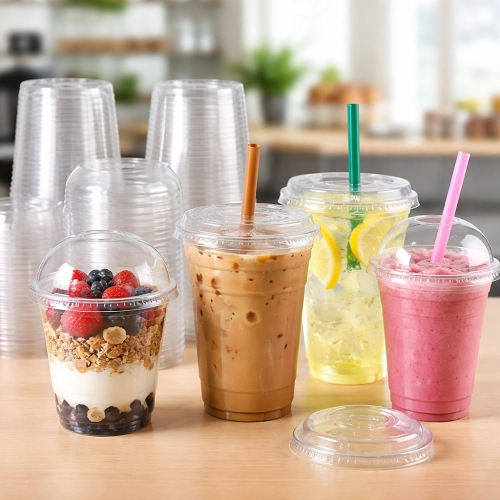
Clear PET cups are beverage and cold food containers made from Polyethylene Terephthalate (PET)—a clear thermoplastic polymer belonging to the polyester family. PET is widely used in food and beverage packaging due to its crystal-clear transparency, strength, and recyclability, making it a go-to solution for cafes, beverage brands, restaurants, events, and retail foodservice environments.
Unlike opaque disposable cups (paper or polystyrene), clear PET cups allow consumers to see the contents clearly, adding visual appeal and enhancing the presentation of drinks such as iced coffee, smoothies, milk tea, fruit juices, and sparkling beverages.
PET is a polyester created by polymerizing ethylene glycol and terephthalic acid.
While its barrier properties aren’t as strong as multi-layer packaging designed for long shelf life, PET provides excellent short-term protection for carbonation and aroma preservation in cold drinks. Its non-porous surface and FDA/EFSA food-contact certifications ensure beverages remain hygienic and uncontaminated.
One of the standout attributes of clear PET cups is their optical clarity, which not only enhances product aesthetics but also influences purchasing decisions by allowing consumers to see what they’re getting.
They come in standard sizes from small tasting portions (~8–12 oz) to larger 20–24 oz and beyond, catering to different beverage formats.
Clear PET cups can be screen-printed or digitally decorated with logos, menu items, QR codes, and other branding elements that elevate both aesthetic appeal and customer engagement.
Clear PET cups used for beverages should comply with global food safety standards, including:
These ensure the material is free from BPA and harmful additives and doesn’t contribute contaminants to the drink.
PET’s non-porous surface and resistance to bacterial adhesion help maintain hygienic conditions. Its durability also reduces the risk of microplastics release that can happen with some laminated paper cups under certain conditions.
Though designed for single-use, PET cups can be washed and reused safely in low-risk contexts, provided food safety and cleanliness standards are upheld.
PET is classified under plastic recycling code #1 and is one of the most widely recycled plastics globally. Products made from PET cups can be recycled into new PET products when processed through appropriate recycling streams.
Recycled PET (rPET) is increasingly used, reducing reliance on virgin material and cutting carbon emissions. Modern designs may include up to 50–65% recycled content without compromising clarity or performance.
Even though PET is recyclable, actual recycling depends on local infrastructure—curbside programs may vary, and consumers should ensure cups are rinsed and sorted appropriately.
Clear PET cups are primarily designed for cold beverages. Exposure to hot liquids may cause warping or deformation, so they are not recommended for hot coffee or tea unless specified by the manufacturer with enhanced heat resistance.
While PET is recyclable, not all municipal recycling programs accept all PET packaging types—especially when attached to lids made of different plastics. Check local guidelines.
In some specialized operations (e.g., film sealing machines), PET may require tailored sealing films; mismatched materials (e.g., PP films) can compromise seals. Operators should match equipment to PET specifications.
When choosing clear PET cups, consider:
Clear PET cups combine technical excellence with practical versatility. Their clarity, strength, food safety compliance, and recyclability make them a popular choice across beverage and foodservice industries. By understanding material properties, design options, and environmental considerations, businesses can optimize their use of PET cups to elevate product presentation, streamline operations, and align with sustainability goals.