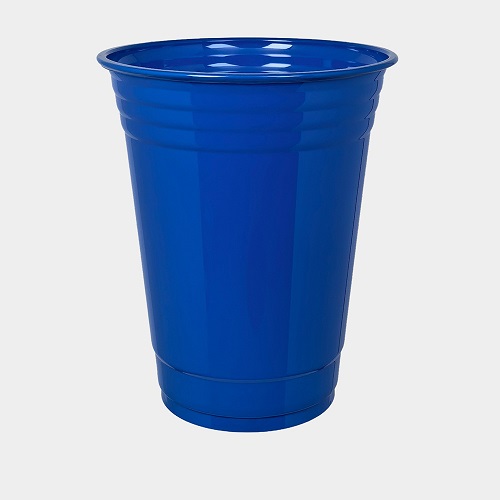
Polyethylene terephthalate (PET) has become one of the most widely used thermoplastic polymers in the world due to its strength, clarity, lightweight characteristics, and recyclability. Among its numerous applications, PET colored plastic cups play a vital role in the food and beverage industry, where they serve both functional and aesthetic purposes. These cups are not only designed for serving drinks but also for enhancing brand identity and consumer experience through color and design customization.
PET (C₁₀H₈O₄)ₙ is a linear aromatic polyester synthesized from terephthalic acid (TPA) and ethylene glycol (EG) through a condensation polymerization reaction. Its repeating ester linkages provide rigidity and chemical resistance, while its semi-crystalline nature gives it high mechanical strength.
| Property | Typical Value | Significance |
| Density | 1.38 g/cm³ | Moderate density suitable for rigid packaging |
| Melting Point | 250–260°C | Allows for high-temperature processing |
| Glass Transition Temperature (Tg) | ~70–80°C | Limits direct exposure to heat above this point |
| Tensile Strength | 55–75 MPa | Ensures structural stability under load |
| Elongation at Break | 50–150% | Provides limited flexibility |
| Oxygen Barrier | High | Essential for beverage preservation |
PET’s transparency and gloss make it ideal for visually appealing packaging, while its chemical inertness makes it food-safe under most conditions.
Coloring PET plastic cups involves integrating pigments or dyes into the polymer matrix during compounding or injection/stretch-blow molding. The main objective is to achieve consistent hue, opacity, and UV stability without compromising mechanical or barrier properties.
| Additive Type | Function | Typical Material |
| Color Pigments | Aesthetic and branding | TiO₂ (white), Carbon black, Phthalocyanine blue/green, Azo dyes (red/yellow) |
| UV Stabilizers | Prevent degradation and discoloration | Benzotriazole, HALS compounds |
| Slip Agents | Improve demolding and stacking | Erucamide, Oleamide |
| Nucleating Agents | Enhance crystallinity and stiffness | Sodium benzoate, Talc |
PET is hygroscopic and must be dried to <0.005% moisture content before molding. Moisture causes hydrolytic degradation, reducing molecular weight and mechanical strength.
| Parameter | Testing Method | Acceptable Range |
| Wall Thickness | Ultrasonic gauge | ±10% variation |
| Color Consistency | Spectrophotometer (ΔE value) | ΔE ≤ 1.0 for premium products |
| Haze/Transparency | ASTM D1003 | <5% haze for transparent grades |
| Impact Resistance | Drop or puncture test | No cracking under rated load |
The optical brilliance of PET allows for clear or tinted finishes, enhancing product visibility while maintaining durability and recyclability.
PET is fully recyclable, and colored cups can be reprocessed into flakes and reused in non-food applications.
PET colored cups used in food contact must comply with FDA (21 CFR 177.1630) or EU Regulation (EU) No 10/2011.
Emerging research focuses on bio-based PET (bPET) and chemical depolymerization technologies that enable true circularity — allowing even colored PET waste to be depolymerized into its original monomers for reuse.
PET colored plastic cups represent a sophisticated balance between aesthetics, performance, and sustainability. Their successful production depends on mastering the interplay between material chemistry, colorant behavior, and processing technology. While environmental concerns related to coloring and recycling persist, ongoing innovation in additive design, polymer chemistry, and recycling infrastructure is paving the way toward a more circular and eco-efficient future for PET packaging.